Online Quran classes for kids are structured, live video lessons that teach children Quran recitation, Tajweed, memorization, and basic Islamic values through one-on-one or small group sessions with a qualified tutor, from the comfort of home. This guide walks you through everything you need to know before enrolling your child, from choosing the right teacher to understanding costs, safety, and what actually works for young learners.
Why More Parents Are Moving Away from In-Person Madrasahs
A decade ago, most Muslim families relied on the local mosque or a nearby Quran teacher. Today that landscape has shifted for a few practical reasons.
Local madrasahs often have long waitlists, fixed class times that clash with school, and limited female teachers for daughters. Online platforms remove all three problems at once. A child in Chicago can learn from a certified Hafiz in Cairo, at 5pm on a Tuesday, without anyone driving anywhere. Parents also get something traditional classes rarely offer: a front row seat. You can sit in the next room, hear the lesson, and know exactly how your child is progressing instead of relying on a report card once a month.
None of this means online learning is automatically better. It works well when the platform is well run and poorly when it isn’t, which is exactly why the rest of this guide focuses on how to tell the two apart.
What Actually Happens in an Online Quran Class
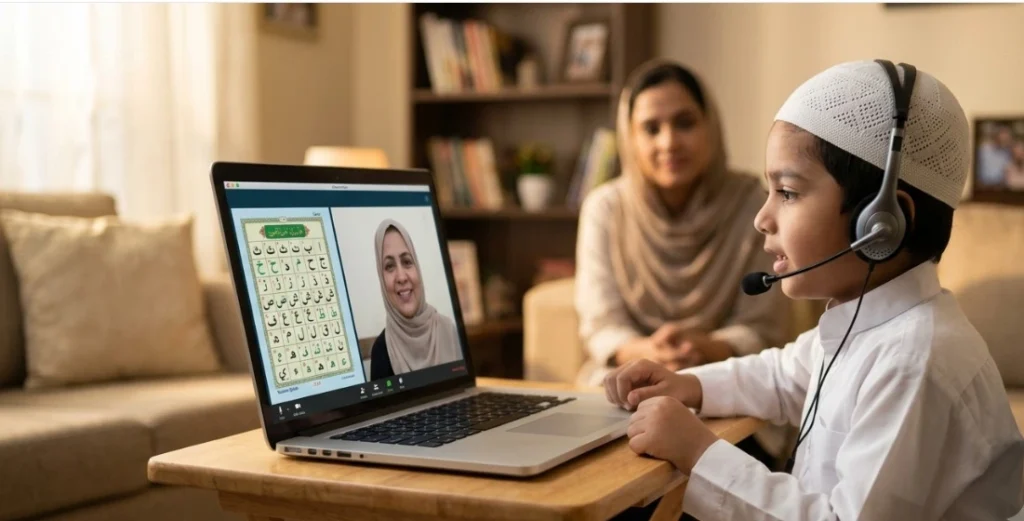
A typical session runs between 25 and 45 minutes depending on the child’s age, and takes place over Zoom, Skype, or a dedicated learning portal. The teacher shares their screen with a Quran text or Noorani Qaida chart, the child follows along and repeats after the teacher, and the tutor corrects pronunciation in real time.
Younger children, roughly ages 4 to 6, usually spend most of the lesson on Arabic letter recognition, short duas, and simple listen and repeat exercises. Children aged 7 and up move into structured Tajweed rules and gradually longer memorization portions. Most reputable academies also send a short progress note or recording after each class so parents aren’t left guessing.
What Is the Right Age to Start?
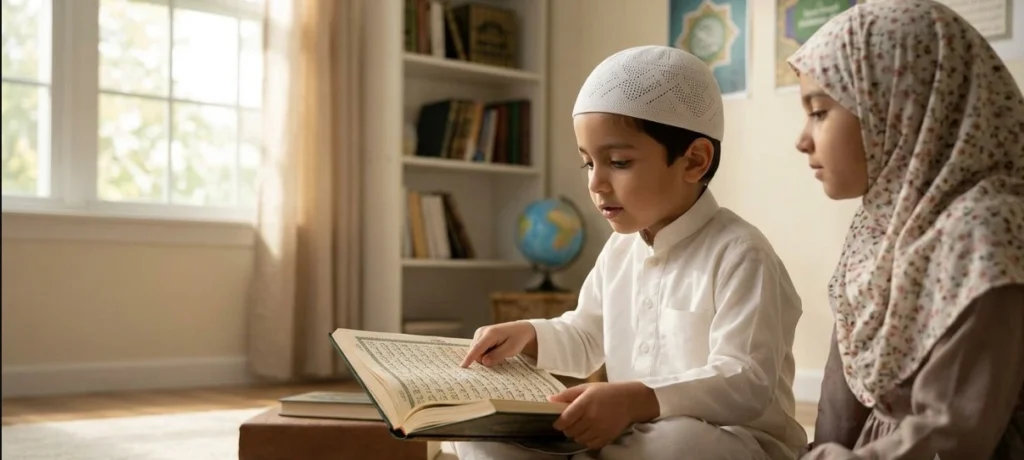
There is no single correct age, but most qualified teachers recommend starting between 4 and 6 years old. At this stage children are naturally good at repetition and pattern recognition, even before they can read fluently in any language, which makes early Arabic letter sounds easier to absorb.
That said, starting later is not a disadvantage. A focused 9 or 10 year old with good study habits often progresses faster than a distracted 4 year old, simply because attention span matters more than age alone. The honest answer for most families: start whenever your child can sit still and focus for 20 to 25 minutes, and let the teacher adjust the pace from there.
The Core Curriculum: What Kids Actually Learn
Every serious program builds on the same foundation, even if the branding differs.
Noorani Qaida
Noorani Qaida comes first for beginners. It teaches Arabic letters, their shapes in different positions, and basic joining rules, essentially the alphabet stage before real Quran reading begins.
Tajweed
Tajweed is the set of pronunciation rules that govern how each letter and word should sound when recited. Skipping this stage is the single biggest mistake families make, because incorrect habits formed early are much harder to unlearn later.
Hifz
Hifz, or memorization, is optional and usually introduced once a child reads confidently. A good Hifz program includes daily revision of previously memorized portions, not just new material, since retention depends far more on repetition than on speed.
Islamic studies
Islamic studies rounds things out with short surahs, daily duas, basic manners, and stories of the prophets, taught in age appropriate language rather than adult level explanation.
One on One or Group Classes: Which Fits Your Child?
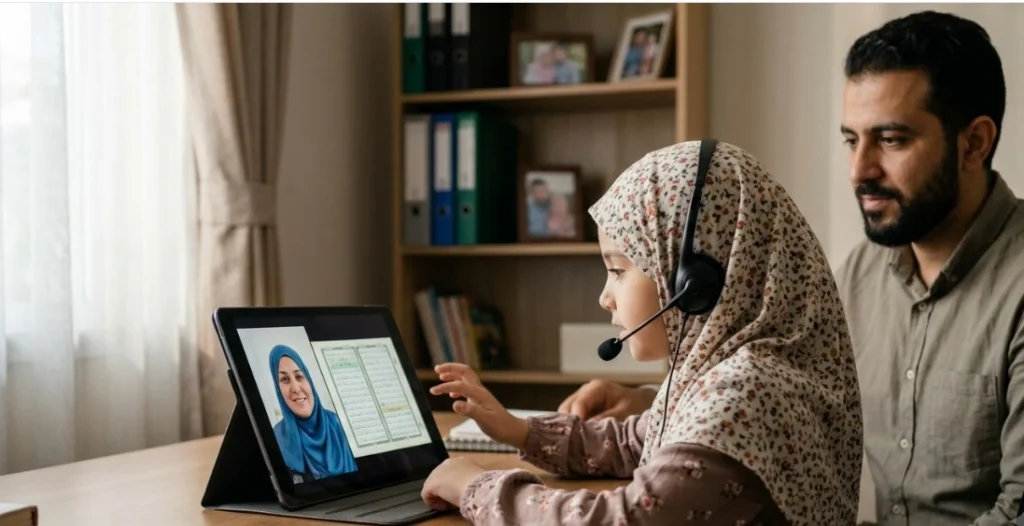
Individual sessions give a child the tutor’s full attention and let the teacher move at exactly the child’s pace, which matters a lot for shy kids or those who need extra repetition. Group classes, usually 2 to 4 children, cost less and add a social element that some kids respond to well, since hearing a classmate recite can be motivating rather than distracting.
If your child gets anxious speaking in front of others or has a specific learning need, individual sessions are almost always worth the extra cost, at least to start. You can always add a group class later once confidence builds.
How to Choose a Trustworthy Platform
A Practical Checklist
With dozens of academies advertising similar promises, the differences that actually matter are easy to miss. Before enrolling, check for
- Verify teacher credentials. Ask specifically whether the teacher holds an Ijazah (a formal certification of Quran recitation) and how many years they’ve taught children, specifically, not adults.
- A free trial class. Any legitimate academy will let you sit in on one lesson before you pay. Treat refusal as a red flag.
- A visible curriculum path. The teacher should be able to explain, in plain terms, what your child will cover in month one, three, and six.
- Parental access to recordings or progress notes. You shouldn’t have to ask twice for an update on how your child is doing
- Clear cancellation and rescheduling policy. Kids get sick, families travel; a rigid academy with no flexibility will eventually frustrate you.
- Separate male and female teacher options, particularly important for many families once daughters reach a certain age.
Safety and Privacy: What Parents Should Insist On
Because these are live video sessions with a stranger, safety deserves its own section rather than a footnote.
Look for platforms that record every session by default (for your review, not the teacher’s), require teacher background checks, and never ask a child to be on camera alone without a parent nearby or reachable. Avoid any service that pressures you to skip the trial or share payment details before you’ve actually met the teacher. A short conversation with the academy’s support team about their safety policy, before you enroll, tells you a lot about how seriously they take it.
What Do Online Quran Classes Cost?
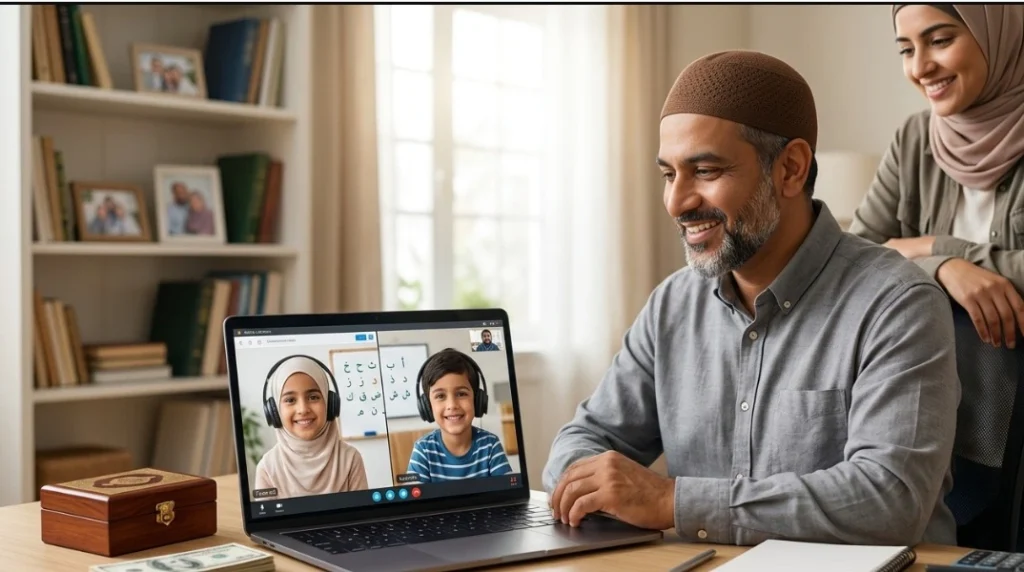
Pricing varies widely by teacher experience, session length, and one on one versus group format, but as a general guide:
- Group sessions typically run from around $20 to $40 per month.
- Individual sessions with an experienced teacher generally range from $50 to $120 per month for two to three classes a week.
- Highly credentialed teachers, such as certified Hafiz or Tajweed specialists, may charge more per hour.
- Most families find the fairest approach is to trial two or three platforms in the same week and compare not just price but how the child responds to the teacher, since a slightly pricier tutor your child actually enjoys will always outperform a cheaper one they dread.
Keeping Kids Engaged: What Actually Works
Consistency beats intensity. A 20 minute session four times a week builds stronger habits than one long weekend class, because Quran recitation is a skill that depends on regular, spaced repetition rather than cramming.
Simple habits that help at home: sit with your child for the first few minutes of class so they feel supported, keep a small reward chart for completed weeks rather than individual lessons, and avoid correcting their recitation yourself unless the teacher asks you to, since mixed signals from two different “teachers” can confuse a young learner.
Common Mistakes Parents Make
Rushing straight into memorization before a child can read confidently is probably the most frequent error, since it produces recitation that sounds right but isn’t grounded in real understanding of the letters. Switching teachers too often is another; children, especially younger ones, take a few weeks to become comfortable with a new voice and teaching style, so give a teacher at least a month before deciding it isn’t a fit. Finally, treating the trial class as a formality rather than a real evaluation means missing the best chance you’ll get to see how the teacher actually handles a child who is bored, distracted, or shy.
Frequently Asked Questions
What age should my child start online Quran classes?
Most teachers recommend age 4 to 6, though there’s no strict cutoff. A child who can focus for about 20 minutes is generally ready.
How long should each class be?
Between 25 and 45 minutes, depending on age. Younger children usually do better with shorter, more frequent sessions.
Is one on one or group better for beginners?
Individual classes generally work better for true beginners since the pace can match the child exactly, though group classes are a good lower cost option once basics are in place.
How much do online Quran classes typically cost?
Group classes usually range from $20 to $40 a month, while individual sessions run roughly $50 to $120 a month depending on frequency and teacher experience.
Can my child memorize the whole Quran online?
Yes, structured Hifz programs delivered online are common and effective, provided the schedule includes daily revision alongside new memorization.
How do I know if a teacher is qualified?
Ask whether they hold an Ijazah in Quran recitation and how much experience they specifically have teaching children, not just reciting themselves.
Are online classes safe for kids?
They can be, provided the academy records sessions, screens teachers, and gives parents visibility into lessons. Always sit in on the first few classes.
Related Posts